

The problem with problems you cannot see
Every store in a chain is a dependency. One system offline affects staff, disrupts operations and creates loss that is difficult to recover. When that happens at a single location, it is inconvenient. When it happens at scale, without a clear view of where and why, it becomes a structural weakness. The traditional response is to send someone. A manager drives to the store, assesses the situation and reports back. The problem may be resolved but valuable time has been lost, and the same issue may be occurring elsewhere without anyone knowing. The alternative is not more travel. It is better visibility.
What centralised oversight actually looks like
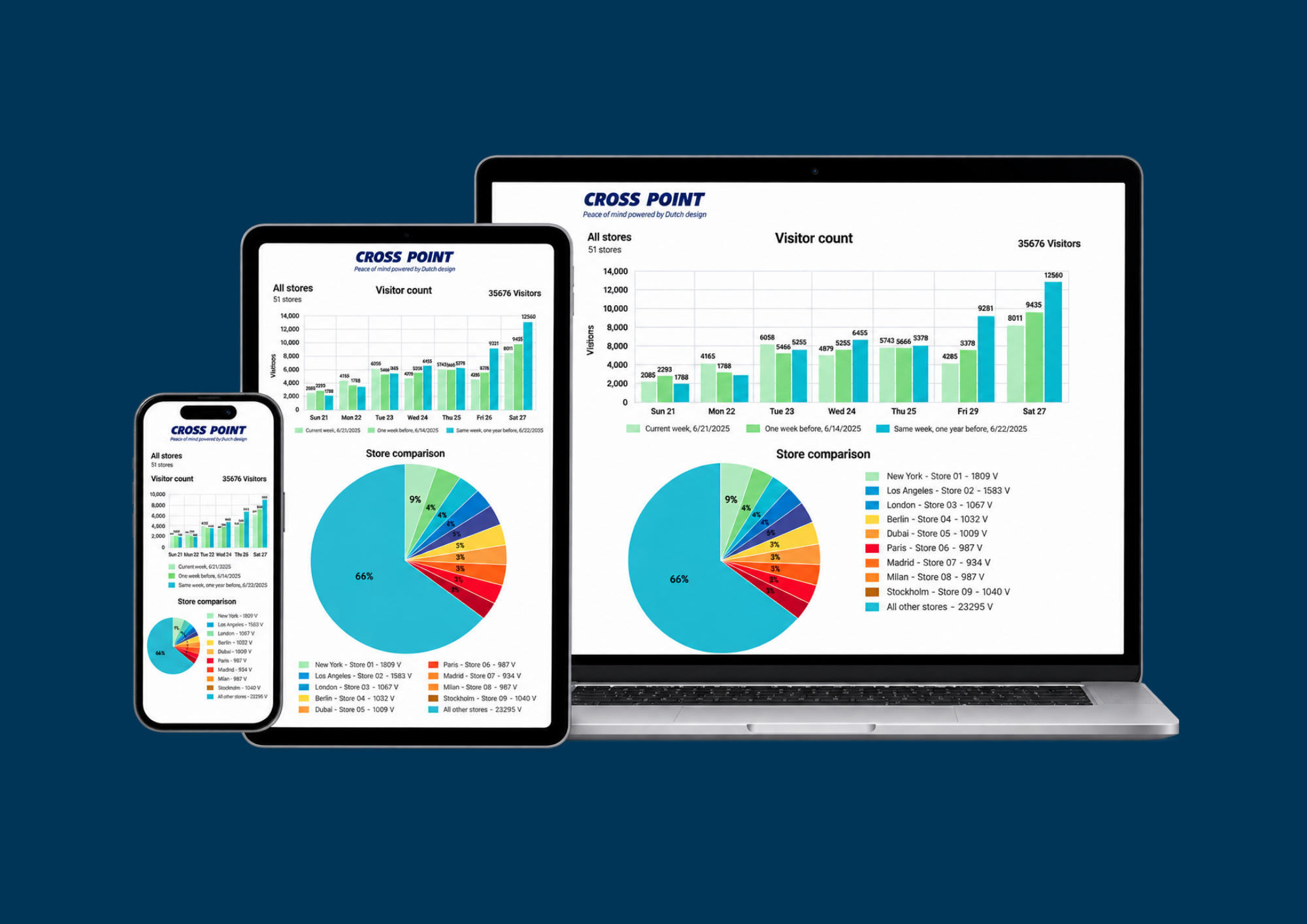
A connected store system produces data continuously: alarm activations, system status, visitor counts, comparative performance across locations. When that data is brought together in a single platform, patterns become visible that would otherwise be hidden in separate reports. A store manager can see at a glance which locations are performing as expected and which are showing anomalies. An unusual spike in alarm activity at a particular time of day. A system that has gone offline overnight. A branch where visitor numbers are rising but conversion is falling. These are not exceptional events. They happen regularly across any retail chain. The difference is whether someone can see them in time to act.
Remote resolution changes the economics of support
When oversight leads to action, the ability to act remotely changes the calculation significantly. Many system issues can be diagnosed and resolved without a technician on site. Which means no travel time, no store disruption and no waiting. For retail chains operating across multiple locations, this is not a marginal efficiency gain. It is a fundamental shift in how support works. Issues that would previously have required a half-day visit can be resolved in minutes. Store teams are not left waiting. Operations continue. Cross Point resolves the majority of issues remotely at first contact. When an on-site visit is genuinely required, it is scheduled quickly and with full prior knowledge of what needs to be done.
Data that earns its place
Operational data is only useful if it leads to better decisions. Which store layout drives the highest conversion? At what point in the week does a particular branch need additional staff? How does footfall respond to weather, to promotions, to changes in the neighbourhood? These are not abstract questions. They are the questions that retail managers ask every week and that connected store systems can answer. Provided the data is structured, accessible and reliable. The goal is not dashboards for their own sake. It is clarity that allows store managers to focus on their customers and their teams, rather than chasing information they should already have.
Control is not a luxury
Retailers who operate with full visibility across their stores are not using fundamentally different technology from those who do not. They are using the same components – detection, counting, cameras, software – connected as a system rather than installed as separate tools. The result is a different kind of confidence. Not the absence of problems, but the certainty that when something happens, you will know about it and that support is already on its way.